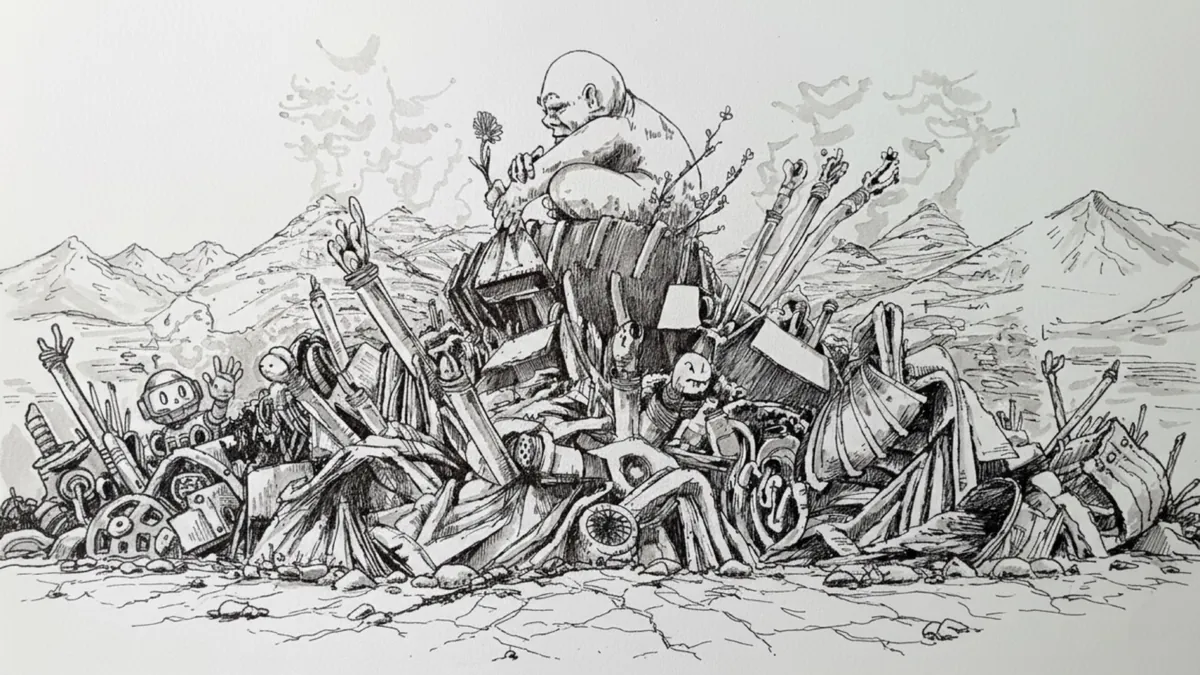
Blissful Ignorance

I often wondered where ignorance comes from — and, more importantly, whether it is a real observation or just my imagination.
“Most people are not content with their belongings, but surely they are content with their intelligence.” — an ambassador from Tolstoy’s Anna Karenina.
Indeed. Many people react defensively, even aggressively, when shown how little they understand about themselves. Fewer still will admit it. And of those who admit it, fewer ask for advice and act on it. So it is a rare and precious thing to talk with someone and both leave a little wiser.
Conscious advice comes only when it is asked for, and it is given with sincerity. This is how trust grows between people, and how a peaceful society grows with it.
“Ignorance is bliss” because the realization that would come from contemplating a hard truth is replaced with instant comfort. When we pass the homeless on the street, we can feel grateful for our own life and move on — comfort restored. Few stop to contemplate that life as part of their own, to inquire into how a person arrives there. Contemplation costs effort; comfort is free. Most choose free.
I noticed something about the mind. An observation can be described plainly. An insight cannot — an insight is an attempt to understand, and understanding asks for an individual effort that no one can make for us. It happens in contemplation, when we feel the truth behind a thought. No wonder great minds think alike: greatness is the result of the same process, walked alone. The strange part is what happens when we share an insight — those who listened but never walked that path often meet it with the fiercest resistance.
“Eppur si muove.”
Most people want proof — irrefutable, unconditional, and delivered by someone else. They want truth as a birthright, without the effort of earning it. We built artificial intelligence this way: a few people understood deeply so that many could stop thinking entirely — and feel relieved about it.
Why do people become ignorant? Because curiosity is repressed, again and again, from childhood.
Each time curiosity is cut before it can connect, apathy grows in its place. In a child, a few cuts are enough to make them forget the curious impulse entirely. The ability to build complex memories decays, leaving a mind fit only for short bursts of attention. As adults, such a mind can hold a subject for seconds; a full minute of contemplation feels like it might break something. Meditative practice can calm the impulses — but calm is not capacity. To rebuild the capacity to understand complexity, the mind has to be trained, the neural pathways strengthened, like any other muscle.
Ignorance is the unwillingness to explore, born in the comfort of the present moment, while the consequences we avoid seeing do not yet threaten us. Ignorance is inaction at the level of perception: if the thought never forms, the emotion never follows, and nothing has to change. It is useful in small doses — when we have one mission and must not be distracted. But we cannot hide forever from what life wants us to experience. It waits.
Am I ignorant? Of the starving, the warring, the homeless? I feel something when I meet them in the news, and I choose to contemplate their existence briefly, without pretending I can carry it all. I hold plans that might help one day — like a symphony that plays in my mind while I own no instrument to play it. For now, I do what I can, where I stand.
Blissfulness hides in the ignorance of our own beliefs. We can experience the realization of truth only if we devote ourselves to inquiry, reflection, and contemplation as one whole process. If we only wait for the answer, we are handed a seed instead of its fruit.