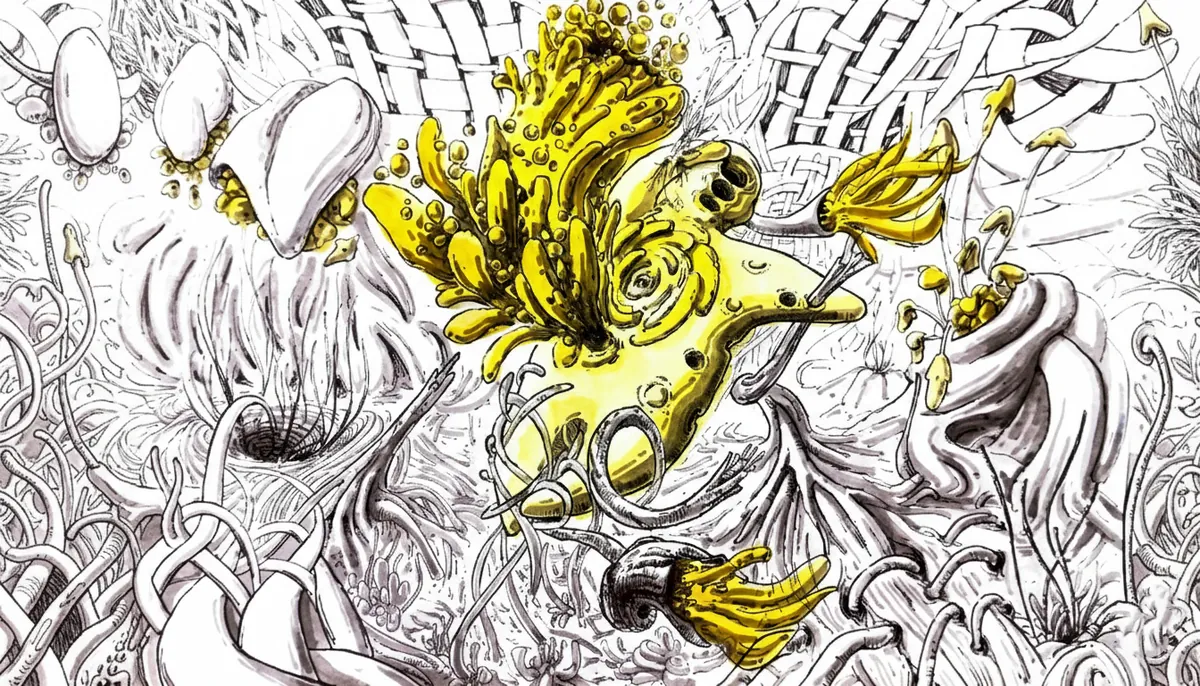
“What the love” do present people actually do
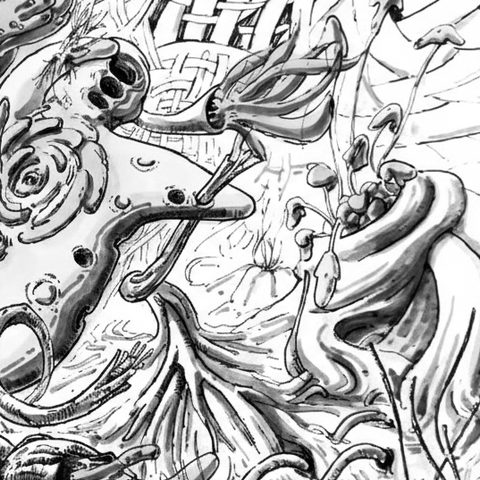
When I close my eyes, fully awake, I can fly through an inner world and forget where I am. Whatever happened there, happened in the present.
So — what is a memory made of, and how does it form?
Every memory holds both a perception witnessed and an emotion felt, at the same moment. It forms either by manifesting an emotion in connection to a perception, or by experiencing a perception that connects to an emotion.
I had this realization about a year ago, in the same coffee shop where I am writing now. In the present moment we have to be aware of something coming from within — emotion — and something coming from outside — perception. Only then, and there, does memory form. Memory is always the result of a conscious act.
Recall your last five minutes and you’ll feel the truth of it. Those memories quietly shape what you do next; behaviour is the embodiment of memory. I suspect memory reaches deeper than the mind — into the body, perhaps further still — though that is intuition, not evidence, and the study of these things has barely begun.
Awareness is always present. Awareness is present. If “being present” is a concept, awareness is the real thing — constantly moving, leaving memory behind it like a trail. We are that awareness; it is the one thing we can be sure exists.
Awareness behaves in three ways:
Awareness flows through the nervous system as an electrical signal. I reserve the word conscious awareness for the signal that connects a perception to an emotion. Direct awareness to the eyes and more conscious seeing happens; to the ears, more hearing; we can even feel the blood move, the heartbeat in every cell. We can move awareness through the body and change our perceptive, cognitive, and emotional state.
The quality of awareness is what we generally call intelligence — and it spans three realms: perceptive (sensory) intelligence, of what we witness around us; cognitive (mental) intelligence, of what we can imagine in the mind; and emotional (spiritual) intelligence, of what we feel from within. Someone may perceive almost everything yet struggle to imagine a new approach; another may read their own and others’ emotions beautifully yet stumble on a problem. Every human is a unique spectrum of these qualities, in different amounts — and the quality of each can be trained, by consciously coordinating the architecture of the mind to connect perception and feeling more efficiently.
You, reading this, went through these lines at your own speed and in your own way — decoding them into knowledge through your mind, colored by your emotions, uniquely experiencing my manifestation. Then you can contemplate it, and each insight becomes a new path through your life.
On a walk once, everything in my awareness was consciously connected — every sight, every thought, every emotion. I still remember every step. That is the state of pure being, when sensation, thought, and emotion align around the centre of our being. Reaching it is easy; holding the balance is hard. We call it meditation — a state where consciousness and unconsciousness become one, and an inquiry clears without thinking.
For me, presence seems to begin and end with the movement of the diaphragm — guiding the breath, then the heartbeat, then the blood, then the behaviour of our actions. This is the most fundamental thing we do, paired with the most fundamental thing we experience: the air going down the throat into the lungs. If it sounds strange, try two minutes of being aware of both at once.
If the breath is calm, the emotions balance; we feel more, and so we perceive more. We become more present.
My own balance is easily disturbed — by a beautiful face, an idea, a problem to solve, a butterfly crossing my sight. What I can do with those is meet them as a conscious act: play with the perception, the thought, the emotion happening inside this patch of skin I call myself — to go with the flow while flowing with my go.
To see yourself in a mirror unmoved by your image asks for disidentification from the body. To be unmoved by the reflection of your thoughts — from the mind. By your emotions — from memory. These are the levels at which presence can be manifested.
Only a Buddha may know fully, having integrated all the capabilities of a human mind. For the rest of us, presence is a balance among three moves — and they map onto how we learn:
The way to see how un-present we are is to watch our unconscious reactions — the scratching, the finger-biting, the rushing toward something already playing out in the mind. Every movement can be an unconscious reaction or a conscious decision, flowing through the body with peaceful transitions.
The Eastern traditions knew this; yoga, tai chi, and zen are practices for the interconnection of body, mind, and soul. The rest of the world is arriving at the same place through science — because, in the end, everyone has to experiment for themselves.
I hope you made it through. Some ideas here are hard to grasp in one pass; read it again if it calls to you. The hidden purpose of presence is to become more adaptable in this brief world. We grow more present through effort — and a wise person spends their free moments doing exactly that, following the whisper of intuition whenever a little peace is around.
Humanity was here before my birth and will be here long after my death. I live with humanity to connect as much as I can — through others for myself, and through myself for others. I am part of present humanity; therefore, I am eternal.
One last thought: “Be, just present.”